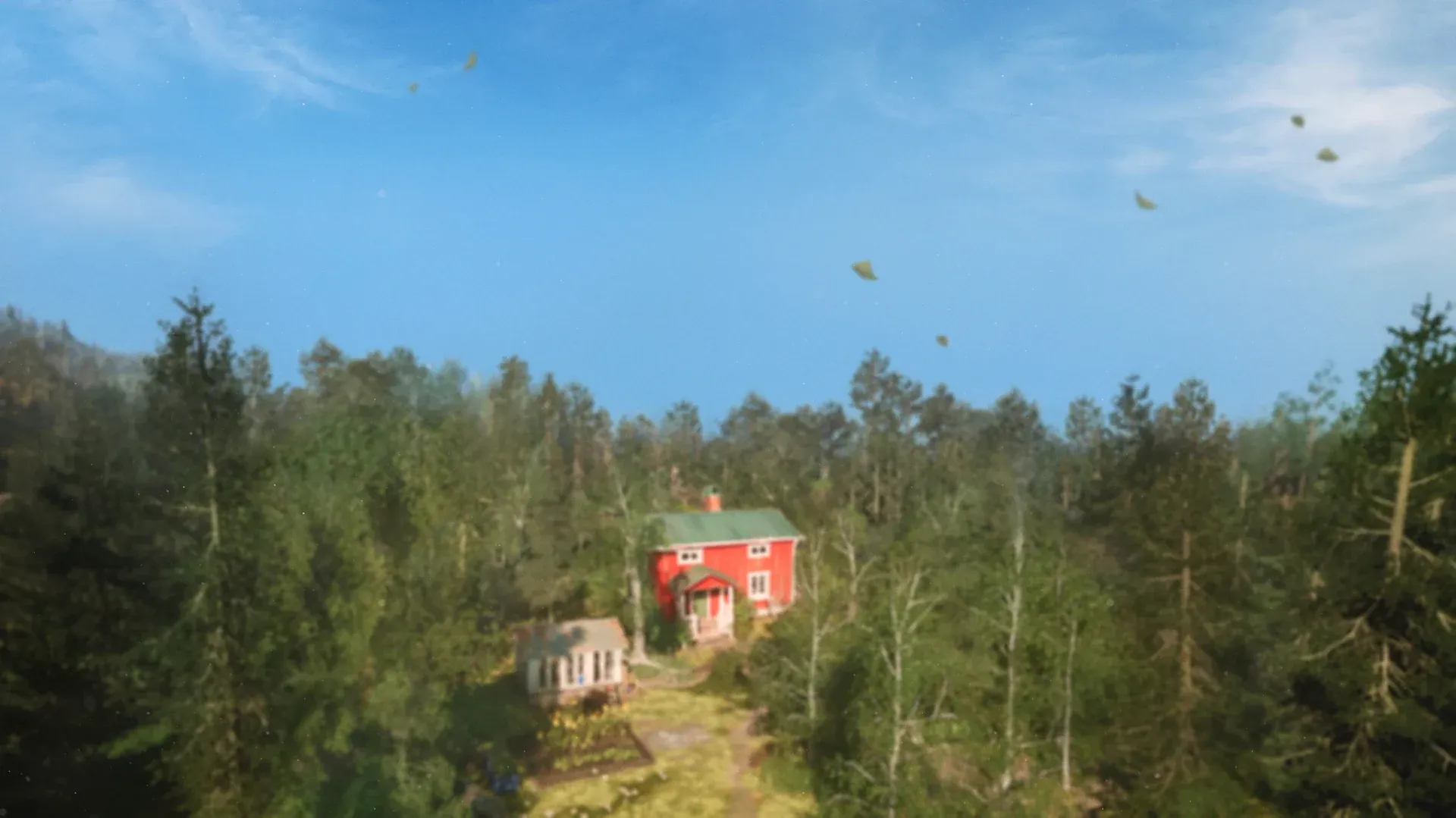
The comparison is inevitable. Hela: of Mice & Magic comes from a core team that worked on Unravel, and the studio openly calls that experience part of its DNA. But the two games are not the same shape, and expecting a 3D Unravel will make Hela harder to enjoy.
Who is behind each game?
Hela is developed by Windup Games, a studio based in Umeå in northern Sweden. Its leadership includes creative director Martin Sahlin, art director Henrik Söder, technical director Jakob Marklund and head of studio Alexander Benitez. The studio has said that a core group of developers previously worked on the Unravel series.
Unravel and Unravel Two were developed by Coldwood Interactive with Martin Sahlin as creative director. Hela is not a Coldwood game and does not continue the yarn creature’s story.
The differences that matter
| Question | Unravel / Unravel Two | Hela: of Mice & Magic |
|---|---|---|
| Perspective | 2.5D side-scrolling | 3D third-person |
| Structure | Linear levels | Open world with non-linear exploration |
| Movement | Yarn-based platforming | Froggy backpack: grapple, swing, glide, climb, carry |
| Combat | Hazards and physics challenges | No combat, no health bar, no death state |
| Co-op | Local co-op in Unravel Two | 1–4 online with crossplay, 2 local split-screen, solo Shades |
| Tone | Melancholy, intimate | Warmer, more playful; still gentle and emotional |
| Story delivery | Environmental, wordless | Letters, villagers, the witch’s memories, the Ritual Keeper |
Scale is the biggest change
Unravel’s levels are handcrafted dioramas that guide you from left to right. Hela’s world is a continuous landscape built at mouse scale, where a garden table is a plateau and a wheelbarrow is a mountain. The camera is behind the mouse, the routes are vertical, and the game expects you to wander.
That changes the pace. Unravel is a sequence of authored puzzles; Hela is a sandbox with puzzles embedded in it. If you try to beeline from objective to objective, you will miss the point — and a lot of the routes.
Co-op is a design pillar, not a bonus
Unravel Two introduced local co-op. Hela makes cooperation a pillar: up to four players online, full crossplay, two-player split-screen and a Shade System that lets a solo player fill the extra roles. The entire story is playable together.
That does not mean solo is a lesser version. Windup has been careful to say the whole adventure works alone. But if you are choosing between the two games for a group, Hela is the one built around the group from the start.
The movement language rhymes
Unravel’s yarn is a rope, a bridge and a swing. Hela’s Froggy backpack uses a tongue as a grapple, a rope as a tightrope and a pair of Shades as anchors. The tools are different, but the pleasure is related: the world is a physical object you can tie yourself to.
The composers rhyme too. Frida Johansson and Henrik Oja, who worked with the team on Unravel, return for Hela. If you remember the music more than the puzzles, that continuity will be familiar.
The differences that do not matter as much as you think
“It looks like Unravel”
The art direction shares a love of moss, bark and natural light, but Hela is not a photoreal Unravel. It is brighter, more open and more playful. The camera is not a side-scrolling frame; it is a third-person view of a world that keeps going.
“It is a cozy game, so it must be easy”
Hela has no combat and no death state, but it is not a walking simulator. The puzzles are physical, the traversal has stamina and momentum, and four-mouse rituals can require real coordination. “Cozy” describes the tone, not the absence of challenge.
“It is a spiritual sequel”
The studio has explicitly framed Hela as a separate, unrelated story. The Unravel DNA is real, but it is an inheritance, not a continuation.
Which should you play?
- Play Unravel / Unravel Two if you want a linear, handcrafted puzzle platformer with a melancholy tone and local co-op.
- Play Hela if you want an open world, vertical movement, non-linear exploration, online crossplay and a warmer story about care.
- Play both if you are here for the team’s sensibility rather than a specific genre. They are different shapes of the same affection for nature.
Spotted a mistake or have a better source? The corrections desk is open. This guide is based on official material and labelled previews; it is not a fabricated playthrough.